CKD Information Letter
Dear Patient
Re: Chronic Kidney Disease (CKD) Patient Information Letter
Why have I been sent this letter?
You are receiving this letter because your recent blood test results show that you have Chronic Kidney Disease (CKD). “Chronic” means persistent or long term.
‘Chronic’ does not mean severe as some people think. In fact, most people with CKD will have mild or moderate degree of CKD. This letter aims to explain more about this condition.
What do kidneys do?
The job of healthy kidneys is to filter waste out of the blood, which turns into urine, to remove it from the body.
What is CKD?
CKD is a condition where the kidneys don’t filter this waste as well as usual.
How common is CKD?
CKD is very common. About 1 in 10 people will have kidneys that show some sign of CKD. It is much more common in older age with approximately 50% of people aged 75 years or over having some degree of CKD. This is often seen as part of the normal aging process rather than a true disease. For most, CKD tends to get worse very slowly, over a period of several years.
Why is it important to know I have CKD?
People with any degree of CKD have an increased risk of developing heart disease or stroke. Therefore, it is important to detect even mild CKD. Treatment may not only slow down the progression of CKD but also decrease the risk of developing heart disease or stroke.
What causes CKD?
For many people the cause is unknown. We do know that it is more common in those with diabetes, high blood pressure or heart problems. It can also be caused less commonly due to an underlying issue with the kidneys such as an inflammatory problem or a history of recurrent urine infections. Early diagnosis and regular monitoring are therefore very important.
How is CKD diagnosed?
- Blood Test called estimated glomerular filtration rate (eGFR) measures how well the kidneys are working by estimating how much waste is in your blood. The more waste products in your blood the lower the filtration rate.
- Urine Test for albumin:creatinine ratio (ACR) – is a measure of increased protein in the urine – a marker of kidney damage.
In combination these can be used to diagnose and then stage CKD.
The Stages of CKD
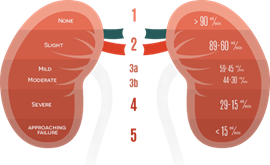
There are 5 stages of CKD. Stages 1 is normal function. Stage 2 is mild, and stage 3 is moderate CKD – these are by far the most common and will be monitored by the GP surgery. Stages 4 and 5 are more severe and are monitored and cared for by a specialist kidney (renal) team.
What symptoms can I expect?
You are unlikely to feel unwell or have any noticeable symptoms with mild or moderate CKD (stages 1, 2 & 3). Symptoms tend to develop when CKD becomes more severe (stages 4-5). These symptoms can vary widely but may include tiredness, itchy skin, muscle cramps, fluid retention (swelling of feet, ankles, face, or hands), increased urinary frequency.
How can I help myself?
Living a healthy lifestyle is the most important thing you can do to decrease the risk of CKD worsening. This includes:
- Decreasing your salt intake
- Eating a healthy diet
- Taking regular exercise
- Losing weight if overweight
- Stop smoking
- Cut down alcohol intake
What happens now?
You are now on a register at the practice for those with CKD. This alerts our staff so that your condition can be monitored and managed appropriately.
You will be invited for an annual review. This will involve having a blood test before you attend followed by a urine test (ACR), blood pressure check and weight check. As long as everything remains stable then this will be all that is required. If there is any deterioration in your kidneys or any other concerns, the GP or clinician will discuss this with you.
Do I need any specific treatment?
Most people with mild to moderate CKD don’t require any specific treatment others may require medications to protect the kidneys. The aim is to relieve any symptoms that may occur and to reduce the risk of CKD worsening or developing any complications. This includes ensuring good blood pressure control and good blood sugar control if you have Diabetes. CKD does put you at a high risk of cardiovascular disease and it is advised that preventive treatment with a statin would reduce this risk – if you are currently not taking a statin and would like to discuss starting in more detail, please make an appointment.
Other important things I need to know?
There are certain medications that are not recommended on a regular basis if you have CKD.
The main group of medications you need to AVOID are:
Non-Steroidal Anti-Inflammatory Drugs (NSAIDS). These include common drugs such as ibuprofen, diclofenac and naproxen. If you need to take any medications over the counter, please check with a pharmacist or your GP to ensure they are safe to take.
Resources
We hope this information has been useful. You can find more detailed information by visiting:
- Importance of a urine ACR test: https://www.youtube.com/watch?v=bRfaYbkuVYo
If you have any questions, please feel free to jot them down and discuss them with your GP or clinical pharmacist or nurse at your review.
Yours sincerely
Harrold Medical Practice